
From Prison to Pleasure: The History of Malmaison Oxford

It is not every day you check into a former Victorian prison. Fewer still have been transformed with this much confidence.
Malmaison Oxford stands within the walls of what was once HM Prison Oxford, a county gaol that housed inmates for over 150 years. Today, those same stone corridors and ironwork details frame one of the city’s most distinctive boutique stays. Cells have become bedrooms. Exercise yards have become social spaces. Architecture built for confinement now hosts cocktails and conversation.
The story behind this building is what makes it extraordinary. The Oxford prison hotel history is not something hidden behind clever branding. It is visible in the bones of the structure, in the preserved cell doors, exposed brick and radial wings that still shape the layout. This is not a theme or a façade. It is history you can feel.
This article explores that journey in full: the prison’s origins, infamous inmates, architectural features, its closure in 1996 and the bold reinvention that became Malmaison Oxford. The Malmaison Oxford prison history is one of transformation without erasure, where heritage is embraced rather than softened.
Oxford Castle Prison: 150 years of confinement
HM Prison Oxford opened in the 1850s as a Victorian county gaol, constructed within the historic Oxford Castle complex in the centre of the city. Its imposing stone façade and radial cell wings reflected the penal philosophy of the era: containment, discipline and reform.
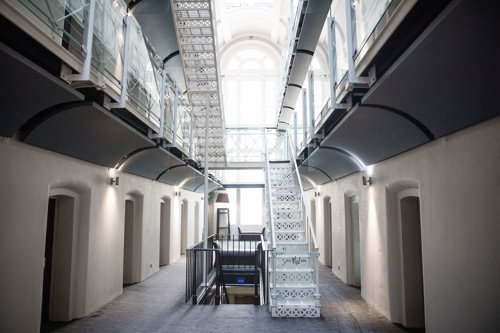
The architecture followed a classic Victorian prison model. Radial wings extended from a central hub, allowing surveillance along long corridors of individual cells. High walls, iron railings and heavy doors reinforced the building’s purpose. It was designed not for comfort, but for control.
Located in the shadow of the castle mound and close to the River Thames, the prison sat in the heart of Oxford rather than hidden at its edges. Over its operational lifetime, it housed hundreds of prisoners ranging from petty thieves to serious offenders. It functioned continuously until its closure in 1996, marking the end of nearly a century and a half of incarceration.
The atmosphere of the original prison was shaped by Victorian punishment philosophy. Conditions were austere. Cells were cold. Comfort was minimal. Silence and hard labour were tools of reform. Within those stone walls, countless personal stories unfolded, embedding themselves into the fabric of the building.
Infamous inmates and notorious stories
Oxford Prison’s history was not limited to minor offences. Over the decades, it held individuals involved in serious crimes and high-profile cases. Public executions once took place within its walls, with the last hanging at Oxford Prison carried out in the 19th century before such practices were abolished.
The prison experienced riots, escape attempts and moments of unrest typical of institutions built around strict control. As penal systems evolved through the 20th century, conditions shifted from harsh Victorian regimens to more modern standards, though the structure itself remained largely unchanged.
Stories linger. Local folklore speaks of restless spirits and unexplained occurrences. Tales of legendary inmates and dramatic moments are woven into the building’s reputation. These narratives add texture to the Malmaison hotel Oxford history, layering contemporary comfort over a foundation of real human experience.
Victorian prison life
Daily routines in Victorian Oxford Prison were rigid. Prisoners rose early, undertook hard labour and were subjected to strict discipline. Solitary confinement was common, designed to enforce reflection and obedience.
Cells were sparse, often little more than stone walls, a narrow bed and minimal sanitation. The architecture itself reinforced control. High ceilings, heavy doors and long sightlines were intended to intimidate and maintain order. This penal philosophy shaped every brick and iron railing you see today.
When you walk the corridors now, you are moving through a structure built to contain and reform. The transformation into a hotel has not erased that past; it sits beneath the design.
Architectural features: Prison bones in hotel design
One of the defining strengths of Malmaison Oxford is how visibly the prison remains within it. Original cell doors, complete with peepholes and heavy locks, are preserved throughout the building. Victorian ironwork lines corridors. Stone walkways and exposed brick walls remain intact.
The A-Wing, B-Wing and C-Wing structure mirrors the original cell blocks, now converted into room corridors. Former exercise yards have become social spaces. Staircases and levels maintain their original form, creating a layout unlike any conventional hotel.
Guests can also access elements of the wider Oxford Castle complex, including the castle mound and historic crypt. The scale and proportions of the prison create a distinctive geography, where long corridors and layered levels feel authentic rather than decorative.
This is not a themed recreation. The Oxford prison hotel history is embedded in real materials and preserved structures. You are not staying in a hotel inspired by a prison. You are staying inside one.
The 1996 closure and years of vacancy
In 1996, HM Prison Oxford officially closed, ending approximately 150 years of operation. Prisoners were transferred, cells emptied and doors locked for the final time.
For years, the building stood vacant. Its future was uncertain. Debates emerged over preservation versus redevelopment. As part of the Oxford Castle regeneration project, the question became clear: what do you do with a Victorian prison in the centre of a historic university city?
The site held listed building status, ensuring that its historic features could not simply be stripped away. This protection created both a challenge and an opportunity. The structure demanded imagination, not demolition.
The answer required bold thinking. A building designed for punishment would be reimagined for pleasure.
Malmaison's bold transformation: Embracing the prison past
The conversion concept was simple in principle but complex in execution: celebrate the prison heritage, do not erase it. Rather than hiding the past behind plasterboard, designers chose to work with exposed brick, iron railings and stone.
Cells were converted into rooms, some retaining their compact original dimensions. Corridors were preserved but upgraded. Original features were highlighted, not concealed. Modern comforts were inserted carefully into Victorian architecture.
The prison aesthetic was embraced. Bold colours and contemporary furnishings contrast deliberately with austere stone. Where once there were bunks and basins, there are now plush beds and monsoon showers.
When Malmaison Oxford opened, it brought life back to empty cells. The paradox is central to its appeal. A building once synonymous with confinement now offers indulgence. The design confidence lies in that contrast. There is nowhere else quite like it.
Staying in a cell: The room experience today
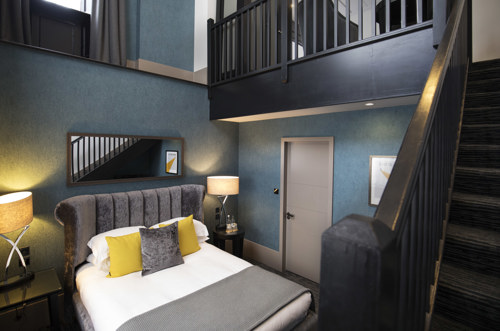
Many rooms at Malmaison Oxford occupy former prison cells. Some retain original proportions, exposed brick and high ceilings. The structure of the past is visible, but the experience is entirely modern.
Big, comfortable beds stand where bunks once did. Monsoon showers replace basic prison basins. Mini bars sit in spaces once used for contraband. Bold interiors bring warmth to what was once austere.
Room categories vary. Some embrace their compact cell origins, offering character-rich stays. Suites provide expanded space and indulgence while still preserving architectural authenticity.
Guests frequently comment on the fascination of sleeping in a former prison. The Malmaison Oxford prison history becomes part of the stay itself, a conversation starter and an Instagram-worthy backdrop. Yet comfort is never compromised. It is a historic setting paired with modern luxury.
The Brasserie and Bar: Dining where guards once walked
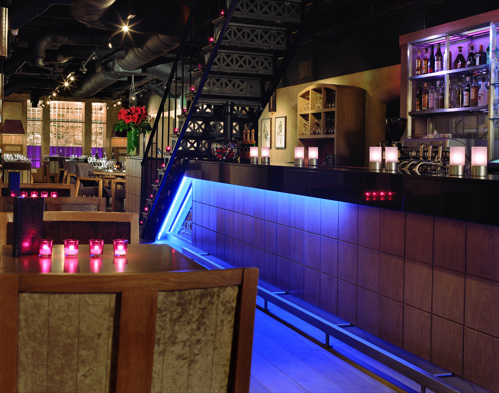
Dining at Malmaison Oxford continues the transformation narrative. Former prison spaces now serve as a social hub. Exposed brick and preserved features frame contemporary dining energy.
The irony is unmistakable. A building once designed to restrict now celebrates indulgence. The brasserie menu focuses on comfort and quality, delivered in a relaxed, stylish setting.
The bar adds another layer. Cocktails are served where confinement once ruled. Laughter echoes through former cell blocks. The transformation from isolation to social connection feels complete.
The Oxford Castle heritage site
Malmaison sits within the wider Oxford Castle heritage site. Guests can explore the crypt, climb the Saxon tower and join guided tours uncovering prison history.
Former exercise yards now host cafés and shops. Staying here means inhabiting a historic complex, not simply viewing it from outside.
Oxford Prison in popular culture and ghost stories
A 150-year-old prison naturally gathers folklore. Oxford Prison has appeared in media and local storytelling, with ghost tales and paranormal claims adding to its mystique.
Guests occasionally report unusual experiences. Staff share anecdotes. Yet Malmaison does not market itself as a haunted hotel. The focus remains on authentic history rather than theatrics.
The atmosphere is historic, not horror driven. Stories in the walls add character rather than fear.
The most haunted room?
Certain rooms and corridors carry reputations for activity, according to local legend. Whether rooted in fact or imagination, these tales are part of the building’s layered identity. They add intrigue, not intimidation.
Location: Oxford city centre with a past
Malmaison Oxford sits within the Oxford Castle grounds, in the heart of the city. University colleges, the Bodleian Library, the Covered Market and High Street shopping are within walking distance. Riverside paths and Christchurch Meadow offer spring walks minutes away.
The contrast is striking. Step out from a former prison into one of the world’s most historic university cities. Oxford’s layered past stretches far beyond the prison walls.
Oxford station is nearby, and London is under an hour away by train. The location makes exploring effortless. By day, discover ancient colleges and independent restaurants. By night, return to one of the city’s most unusual stays.
Why the prison history matters
The Oxford prison hotel history is not a gimmick. It brings authenticity. Real stories. Real architecture. A sense of place that cannot be fabricated.
Malmaison’s design honesty respects the building’s past rather than sanitising it. Guests are not shielded from history; they are invited to engage with it.
Few hotels can claim 150 years of layered narrative. Fewer still allow you to sleep within it. The transformation stands as a metaphor for renewal and reinvention, turning confinement into comfort. It is living heritage. History you sleep in, not just read about.
Experience history at Malmaison Oxford
From Victorian prison to bold boutique hotel, the journey of this building is remarkable. Cell structures remain. Ironwork endures. Corridors tell stories. Yet what was once punishment is now pleasure.
Set within one of England’s most historic cities, Malmaison Oxford offers a stay unlike any other. Sleep in a former cell. Dine within prison walls. Explore Oxford’s past from a base steeped in it.
If you are planning your visit, explore current Oxford hotel offers to shape your stay, whether that means upgrading your room, extending your night or securing the right date in the calendar.
Discover Oxford’s most distinctive stay and book a night in one of England’s most unusual hotel transformations.
History of Oxford FAQs
When did Oxford Prison close and become a hotel?
HM Prison Oxford closed in 1996 after approximately 150 years of operation. After years of vacancy and preservation debates, Malmaison transformed the Victorian prison into a boutique hotel.. The conversion preserved original prison features including cell structures, iron railings, and stone corridors while adding contemporary comfort and bold design.
Can you see original prison features at Malmaison Oxford?
Yes, original prison features are visible throughout the hotel. Many rooms retain cell proportions, original cell doors with peepholes, exposed brick walls, and Victorian ironwork. The hotel's structure follows the original cell block layout with wings and corridors preserved. Rather than hiding the prison past, Malmaison's design celebrates these historic elements, creating an authentically unique hotel experience.
Are the rooms actual prison cells?
Many rooms occupy former prison cells, some retaining the original compact dimensions and architectural features. However, the transformation is complete: big comfortable beds replace bunks, monsoon showers replace prison basins, and bold contemporary design contrasts with the austere Victorian origins. Larger Suites offer more space. You're genuinely staying in a former prison, but with full modern luxury and comfort.
Is Malmaison Oxford haunted?
Like many 150-year-old prisons, Oxford Prison has ghost stories and reported paranormal activity. Some guests and staff mention unusual experiences, and the building's history naturally creates atmospheric moments. However, Malmaison doesn't market itself as a "haunted hotel." The focus is on the genuine historic character and architectural story rather than ghost tourism. Most guests find it fascinating rather than frightening.
Can you tour the prison history at Malmaison Oxford?
Our hotel sits within the Oxford Castle heritage site, which offers guided tours exploring the wider castle complex including the prison crypt, Saxon tower, and historical exhibitions. While staying at Malmaison, you experience the prison architecture firsthand in your room and throughout the hotel. The building itself tells the story through preserved features, and staff can share historical details about the transformation.