
The Real Manchester: Where to Eat, Explore and Stay

Most first-time visitors to Manchester end up doing the same thing: Etihad Stadium, the Trafford Centre, a photo outside the football ground, done. It's not a bad day out, but it's not really Manchester either. The city visitors miss is quieter but far more rewarding, built from converted warehouses, independent kitchens, and neighbourhoods that have spent the last three decades becoming something genuinely their own.
That version of the city has been gathering pace lately. Manchester's food scene now carries real critical weight, its music venues still shape UK culture the way they did in the 1980s, and its neighbourhoods reward the kind of visitor who's happy to walk rather than tick off landmarks. None of this is a new development exactly, but the last few years have sharpened it: openings that used to be word-of-mouth secrets are now getting national coverage, and the city's confidence in its own identity has only grown.
Manchester's Neighbourhoods Are the Real Guide
Forget the checklist. Manchester doesn't organise itself around a single list of sights the way some cities do, and treating it that way misses most of what's interesting here. The city reveals itself neighbourhood by neighbourhood instead, each one shaped by a different chapter of its history and pulling in a different kind of visitor.
Northern Quarter
The Northern Quarter is Manchester's original independent district, built from Victorian and Edwardian textile warehouses that were gradually colonised by small businesses over the last thirty years rather than redeveloped all at once. That slow, organic growth is part of why it still feels genuine rather than curated for visitors.
Mackie Mayor sits at the centre of it: a restored market hall, originally part of the Smithfield Market complex, now home to a dozen independent kitchens under one roof. It's the neighbourhood's clearest landmark and a good first stop for getting a sense of what the area is about.
Beyond the food hall, the district reveals itself in layers. Afflecks, the indoor market trading since the 1980s, still deals in vintage clothing and vinyl the way it did during the Madchester years, while Tib Street's run of independent shopfronts adds coffee roasters and record shops to the mix. It's also the beating heart of Manchester's independent music scene, covered in more detail later.
Ancoats
Ancoats has a fair claim to being the world's first industrial suburb, and its street names still carry the memory of it: several take their names from the Scuttlers, the Victorian gangs who once ran these blocks. Its cotton mills, once the engine room of Manchester's textile trade, are now converted into apartments, restaurants, and bars, and the neighbourhood has been named among the coolest in the UK repeatedly, largely on the strength of its food.
Cutting Room Square sits at the centre of that reinvention, a pedestrianised courtyard closer to a Mediterranean piazza than a Manchester street, with Hallé St Peter's, a deconsecrated church turned Hallé Orchestra recording space, just beside it. Pollen Bakery anchors the daytime side of the food reputation, while Erst, which picked up a Michelin Bib Gourmand in the 2026 guide, covers the evening. Walk east and the canal-side setting of New Islington sits right at the edge of Ancoats, worth folding into the same walk rather than treating as a separate destination.
Castlefield and Spinningfields
Castlefield offers a different register entirely: a canal-side setting with a calmer pace than the Northern Quarter's energy. It's also where Manchester began, in a literal sense. Mamucium, the Roman fort that gave the city its name, stood here from around 79 AD, with reconstructed ramparts still marking the spot beside the Museum of Science and Industry.
Spinningfields, Manchester's more polished business and dining district, grew out of the regeneration that followed the 1996 city centre bombing: glass towers, a financial district anchoring firms like PwC and Barclays, and a scale that reads as considered rather than organic.
Hardman Square, a patch of green where Manchester's old magistrates' court once stood, gives the district some breathing room amid the glass. Restaurants and bars line the surrounding streets, drawing an after-work crowd on weekday evenings and a steadier, more considered pace at weekends. It's not competing for the title of coolest district in the city, and it isn't trying to.
Where to Eat in the Real Manchester
Manchester's food scene has earned its current reputation the slow way, built by independent traders and chefs over years rather than one viral moment. That range shows up everywhere from shared-table food halls to sit-down dinners with genuine ambition, much of it within easy walking distance of the neighbourhoods already covered.
Food Halls and Markets
Mackie Mayor kicked off Manchester's food hall trend, but it's not the only one worth knowing. GRUB, tucked into the Red Bank Project near Victoria station, is the city's longest-running street food market, the kind of place that's launched names like Rudy's Pizza before they ever needed a permanent address. Over in NOMA, New Century Kitchen does something similar with six independent traders and a proper bar to match.
The pattern holds wherever you land: several kitchens, one room, no obligation to commit to a single menu. It's a scene that's earned real critical attention too, enough that Manchester became the first English city outside London to host the Michelin Guide's Great Britain & Ireland awards ceremony, in 2024.
Eating at Malmaison
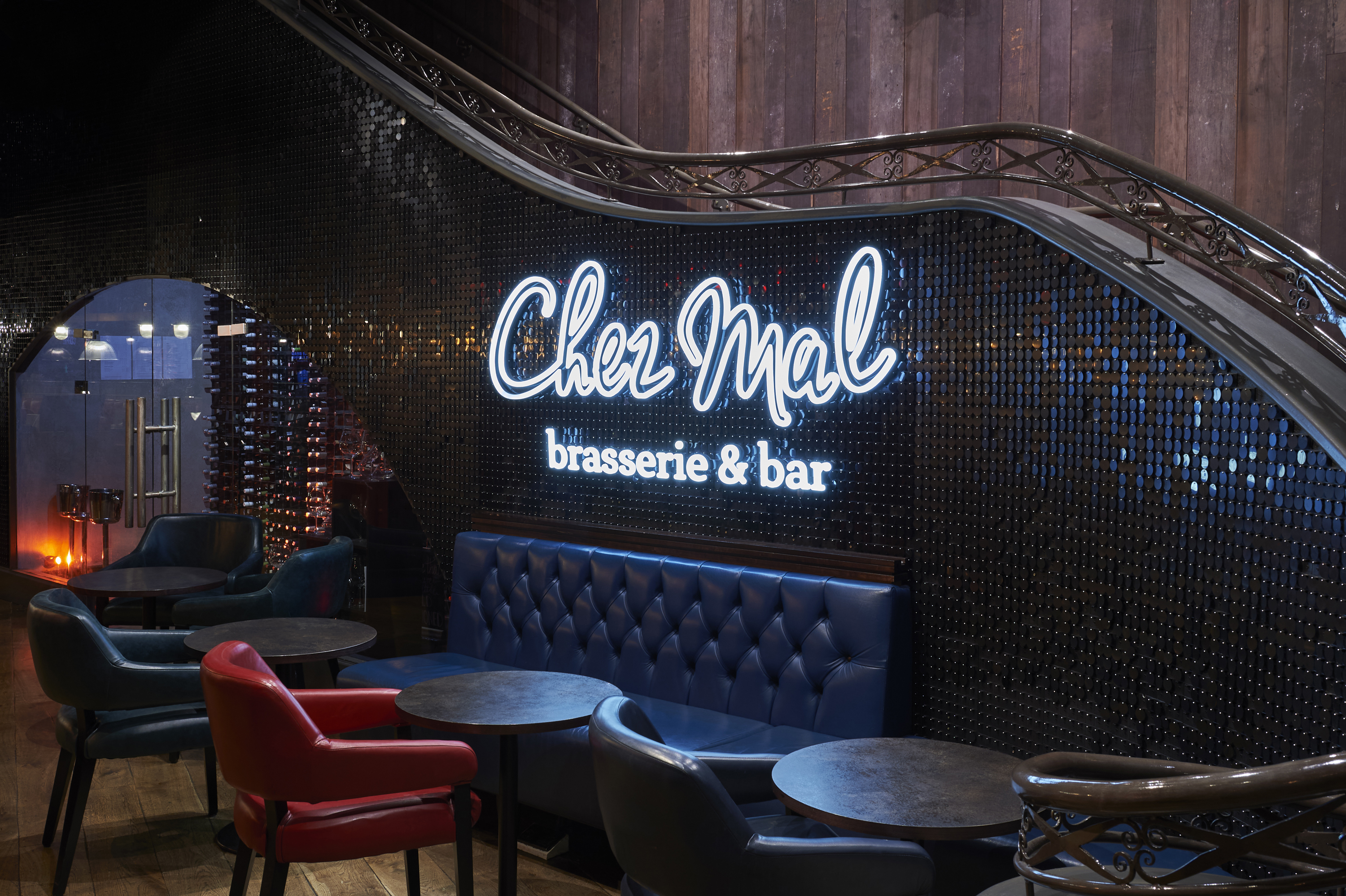
Not every good meal in the city needs a queue outside a converted market hall, and both Malmaison properties hold their own against everything covered above. At the Piccadilly hotel, Chez Mal Brasserie & Bar brings the same modern British, brasserie-with-a-French-twist approach that runs through every Malmaison, built around grilled dishes and a proper cocktail list, drawing locals as much as guests through the week, with in-room dining covering the same menu (during brasserie opening hours) for anyone who'd rather not leave the room.
At Malmaison Manchester Deansgate, Sora does something different: a rooftop Japanese restaurant and sushi bar serving nigiri, sashimi, and robatayaki grill specials, with views over Albert Square and the Town Hall that make it worth the trip even for guests staying at the Piccadilly property instead. Both restaurants run regular deals through the year, from happy hour to set menus, worth checking against current offers before booking.
Beyond the Obvious: Culture and Things to Do
Manchester's cultural life runs just as deep as its food scene, even if the food tends to get the headlines. This is a city that's shaped British music for the last four decades and still takes its galleries and independent art seriously, which makes it worth building into a visit beyond another restaurant booking.
Music Heritage
Manchester's music history isn't confined to a museum. Band on the Wall is one of the oldest live music venues in the UK and still runs an eclectic programme of jazz, world, folk, and electronic music most nights of the week. A short walk away on Oldham Street, Night & Day Café has been a fixture of the city's small venue scene since 1991, the kind of room where you might catch a band before anyone else has heard of them.
Galleries and Street Art
Manchester Art Gallery is an easy walking distance from every neighbourhood already covered here and makes a solid cultural anchor for a morning, with a collection that runs from Pre-Raphaelite painting to contemporary craft. For something less formal, the Northern Quarter's street art scene is worth actively seeking out on foot: murals from internationally recognised artists cover gable ends and side streets throughout the district, changing often enough that a walk here rewards repeat visits. Stevenson Square in particular has become an unofficial gallery in its own right, with pieces appearing and disappearing over the course of a few months.
Where to Stay for the Real Manchester Experience
Everything covered here, the food halls, the music venues, the street art, the neighbourhoods worth walking rather than ticking off a list, comes down to where you choose to base yourself. Malmaison Manchester on Piccadilly puts the Northern Quarter and Ancoats within easy reach, a couple of minutes from Manchester Piccadilly train station, with rooms that carry the brand's usual mix of dark wood, leather, and mood lighting. For a stay built more around Castlefield and Spinningfields, Malmaison Manchester Deansgate on Princess Street, beside Albert Square and Manchester Town Hall, offers the same design sensibility and a rooftop restaurant worth a trip on its own.
Either way, the real Manchester ends up within walking distance: food halls and independent kitchens on one side, canals and quieter streets on the other, and a city that rewards exploring both.
Manchester City Break FAQs
Do I need to book Mackie Mayor or the Ancoats restaurants in advance?
Mackie Mayor itself doesn't take table bookings since it operates on a shared seating, order-at-the-counter basis, so turning up works fine outside peak weekend hours. Individual Ancoats restaurants, particularly Erst and other Michelin-recognised spots, are a different story and are worth booking a few weeks ahead for weekend evenings.
Is the Northern Quarter safe to walk around at night?
Yes, it's one of the busier parts of the city centre after dark thanks to its density of bars and live music venues, which means well-lit streets and plenty of people around well into the evening. As with any city centre, it's worth sticking to main roads late at night rather than cutting through quieter side streets.
How do I get from Manchester Airport into the city?
The train from Manchester Airport into the city centre takes around 20 minutes and runs regularly throughout the day, making it faster and more predictable than a taxi during peak traffic. Manchester Piccadilly station is the main arrival point and sits a short walk from Malmaison Manchester.
Can I do Manchester as a day trip, or does it need an overnight stay?
A day trip covers one neighbourhood reasonably well, but it doesn't leave room for both the food scene and the culture side of the city. An overnight stay makes the difference between rushing through Mackie Mayor and actually sitting down for a proper Ancoats dinner afterwards.
What should I do if it's raining?
Rain matters less here than in most UK cities, since much of what makes Manchester worth visiting sits indoors anyway. Food halls, galleries, and live music venues all work regardless of weather, and Manchester Art Gallery and the various Northern Quarter bars make an easy wet-weather afternoon without adjusting the itinerary much at all.